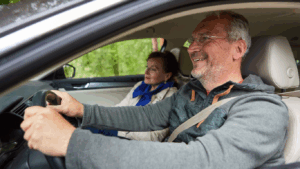



For many retirees, “Snowbirding”—spending the winter in a warmer climate—is the ultimate reward for a lifetime of hard work. You pack up, leave the cold behind, and enjoy 3 to 6 months of sunshine.
But while you are planning your route, you might be forgetting one critical detail: Your car insurance doesn’t always travel as easily as you do.
Insurance rates are based on where your car sleeps at night. If you move your car to Florida for 4 months but keep it insured at your Ohio address to save money, you could be committing “rate evasion”—a form of fraud that can cause your claims to be denied.
As your trusted advocate, we are here to explain the “Garaging Rule” and show you how to properly insure your vehicles in two states so you are never left unprotected.
Key Takeaways
- The Golden Rule: Your car must be insured in the state where it is physically located (garaged) for the majority of the time.
- The Risk: If you have an accident in Florida but your policy says the car is in Michigan, your claim could be denied for “material misrepresentation.”
- The “Parked Car” Trick: You can save money on the car you leave behind by switching it to “Storage Coverage” (Comprehensive-Only).
- The Solution: Tell your agent you are a Snowbird. Most major carriers have specific policies for this lifestyle.
The "Garaging Rule": Why Your Address Matters
Insurance rates are based on local risk factors such as traffic density, theft rates, and weather patterns.
- The Problem: If you tell your insurer your car is in rural Iowa (low rate), but you are actually driving it in downtown Miami (high rate) for 5 months, the insurance company is collecting the wrong premium for the risk they are taking.
- The Consequence: If you file a claim in Miami, the adjuster will ask for proof of residency. If they discover you’ve been living there for months without updating your policy, they can deny your claim and cancel your policy for “material misrepresentation.” This leaves you personally liable for damages.
Scenario 1: You Take Your Car With You
If you drive your primary car south for the winter, you must update your policy to reflect its new location.
Quick Look: The “Traveling Car” Checklist
|
Step
|
Action
|
Why It's Critical
|
|---|---|---|
|
1. Notify
|
Call agent with dates & address.
|
Prevents claim denial for "misrepresentation."
|
|
2. Update
|
Change "Garaging Address."
|
Ensures rate reflects local risk (traffic/theft).
|
|
3. Adjust
|
Pay new local rate.
|
Keeps you 100% legal and covered.
|
- Notify Your Agent: Tell them your temporary address and the exact dates you will be there.
- Update the “Garaging Address”: They will update the “Garaging Address” for that specific vehicle to your winter home. This ensures you are paying the correct rate for that ZIP code.
- The Impact: Your rate might change for those months (up or down depending on the ZIP code), but you will be 100% covered. If you stay longer than 6 months, you may need to register the car in the new state.
Scenario 2: You Leave a Car Behind
If you leave a second car in your northern garage for 4 months, you shouldn’t pay full price for it.
Quick Look: The “Storage Mode” Strategy
|
Coverage
|
Status
|
Benefit
|
|---|---|---|
|
Liability
|
DROP / PAUSE
|
Stops you from paying for road risks you aren't taking.
|
|
Collision
|
DROP / PAUSE
|
No risk of crashing a parked car.
|
|
Comprehensive
|
KEEP ACTIVE
|
Protects against theft, fire, or storm damage while parked.
|
- Do NOT Cancel Insurance: In most states, a registered car must have active liability insurance, or the DMV will suspend your registration and fine you.
- The Fix: “Storage Mode” (Comprehensive-Only): Ask your agent to drop Liability and Collision coverage on the parked car and keep only Comprehensive Coverage. This covers theft, fire, vandalism, or a tree falling on the garage—risks that still exist even when parked.
- The Savings: This can reduce the premium on that car by 70% to 80% while you are away.
- The Warning: You absolutely cannot drive the car while it is in storage mode. If anyone takes it for a spin and crashes, there is zero coverage.
Your Snowbird Departure Checklist
Before you head south, check these boxes to ensure you are legal and safe.
- 1. Call Your Agent: Inform them of your travel dates and new address. Ask specifically if your policy covers you in the new state for the duration of your stay.
- 2. Adjust Coverage: Switch the car you are leaving behind to “Storage/Comprehensive-Only” status to save money.
- 3. Check State Laws: Some states (like Florida) require you to register your car and buy local insurance if you are there for more than 90 days, even if you are not a resident. Check the local DMV rules.
- 4. Update Your Umbrella Policy: If you have an Umbrella policy for extra liability protection, ensure it covers both properties and all vehicles, regardless of location.
How We Rate Insurers for Snowbirds
At Sagewise, we evaluate insurance companies based on how well they serve the unique needs of seniors who travel. We look for:
- National Presence: Does the insurer operate in all 50 states? This makes transferring coverage seamless.
- Flexibility: How easy is it to update a garaging address or switch to storage mode? We favor companies with strong apps or 24/7 support.
- Senior Discounts: Does the company offer low-mileage or defensive driving discounts that benefit retirees?
- Financial Strength: Can the company pay claims quickly, regardless of the state? We prioritize A-rated carriers.
Top Picks: Best Insurers for Snowbirds
You need a national carrier that operates in both your home state and your destination state to make switching seamless.
- Best Overall: State Farm Sagewise Rating: 5.0
- Why it wins: State Farm’s “Snowbird” transfer process is seamless because they have agents everywhere. You can keep your relationship with your home agent, and they can coordinate coverage for your winter location easily. Their “Steer Clear” discount is excellent for safe senior drivers. Check Rates at State Farm
- Best for Flexibility: Geico Sagewise Rating: 4.5
- Why it wins: Geico makes it incredibly easy to update your “Garaging Address” online or via their app without needing to call an agent every time you move. Their low-cost policies are ideal for seniors on a fixed income. Check Rates at Geico
- Best for Military: USAA Sagewise Rating: 5.0
- Why it wins: USAA is built for people who move. They are experts at handling multi-state residency and storage coverage for deployments (or snowbirding). Their customer service is consistently rated #1 for handling complex location issues. Check Rates at USAA
Frequently Asked Questions (FAQ)
Usually, no. As long as you maintain your permanent residence (domicile) in your home state and return there, you can keep your original license. However, if you stay in the south for more than 6 months (183 days), you may legally become a resident of that state and be required to switch.
Yes. If you stay for 3 months or less, a long-term rental might be easier than moving your own car. Use a credit card with Primary Rental Insurance to save money on the rental company’s expensive damage waiver.
If you have “Storage Coverage” on the car, no one can drive it—not even to the grocery store. If they crash, there is zero coverage. If you want a friend to drive it periodically to keep the battery charged, you must keep Liability Coverage active.
Likely, yes. Florida has some of the highest auto insurance rates in the country due to weather risks, high traffic, and a large number of uninsured drivers. Be prepared for a premium increase during your winter months.
It takes one phone call. Call your agent the day before you fly or drive back home to reinstate full coverage on your stored vehicle. Do not drive the car until you have confirmed the coverage is active.
Compare Rates & Save $100’s (Make sure you have the right coverage for your lifestyle at the best price.)