

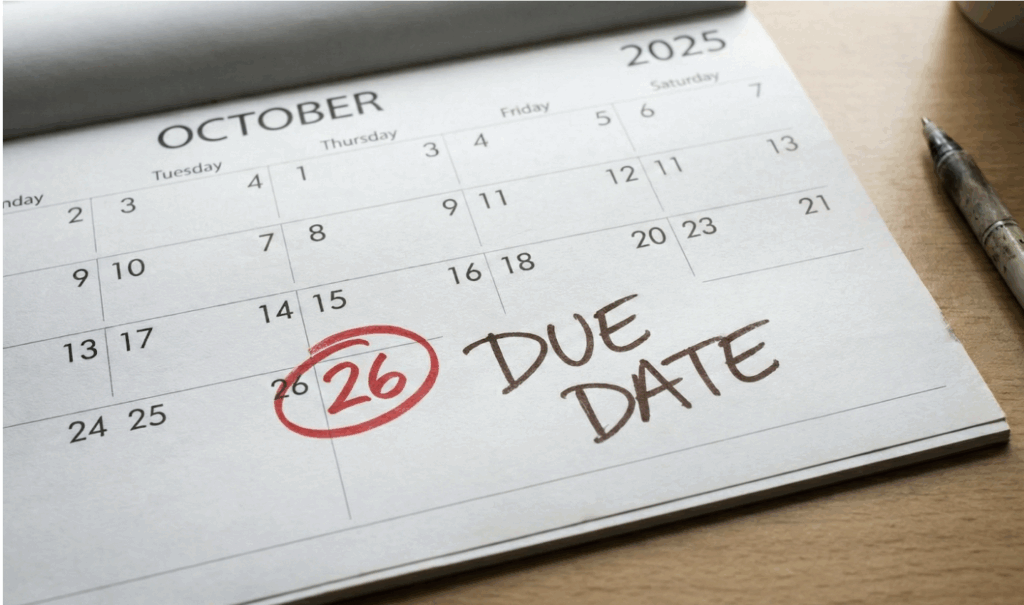

Living on a fixed income requires precision. Your Social Security check arrives on a specific day every month, but your credit card bills seem to arrive whenever they want.
If your check comes on the 3rd, but your credit card bill is due on the 1st, you are stuck in a stressful “cash flow gap.” You might be forced to hold onto the bill, risking a $40 late fee, or overdraft your account just to pay on time.
You don’t have to live like this.
There is a simple, free solution that banks rarely advertise: You can change your payment due date.
As your trusted advocate, we are here to give you the exact steps and the exact script to sync your bills with your income, eliminating late fees forever.
Key Takeaways
- The Right: Federal law requires credit card companies to give you a consistent due date, but you have the right to ask them to move it.
- The Strategy: Move all your bill due dates to 3-5 days AFTER your Social Security deposit date.
- The Benefit: You pay your bills immediately when you have money, reducing stress and eliminating the risk of accidental late fees.
- The Cost: $0. Changing your due date is free.
The "Cash Flow Gap" Problem
- Social Security: Paid on the 3rd of the month (for those who filed before 1997) or on the 2nd, 3rd, or 4th Wednesday (based on your birthday).
- Pension: Usually paid on the 1st or 15th.
The problem arises when your credit card bill is due on a random date, like the 28th. This forces you to “hold onto” money from your previous month’s check for nearly four weeks just to pay the bill.
In that time, life happens. A car repair, a medical copay, or a higher-than-expected utility bill can eat into those reserved funds. By the time the 28th rolls around, the money might be tight, leading to a dangerous choice: pay late and get hit with a $40 late fee, or pay on time and risk an overdraft fee from your bank.
It is much safer—and far less stressful—to have your bill due on the 5th, just two days after your check arrives. This allows you to pay the bill immediately while the money is fresh in your account.
Step-by-Step: How to Change Your Due Date
1. Determine Your “Safe Date” Look at your calendar. When does your main income deposit hit your bank account?
- Example: Money arrives on the 3rd.
- Your Safe Date: Pick the 8th. (Give yourself a 5-day buffer for weekends or bank holidays).
2. Call Your Credit Card Company Call the customer service number on the back of your card.
3. Use This Script (The “Advocate” Script) Don’t just ask; tell them why.
“Hello, I am a senior living on a fixed Social Security income. My current due date is causing me cash flow issues because it doesn’t align with my benefit deposit.
I would like to move my payment due date to the
Insert Date
of each month. This will help me ensure you get paid on time, every time.”
4. Confirm the Change Ask them: “Will this change take effect for the next billing cycle, or do I still need to pay the current bill on the old date?” (Usually, it takes 1–2 cycles to switch).
Find a Safer Credit Card (If your bank refuses to help, it’s time to switch. Find a better card here.)
Digital Option: Doing it Online
- Capital One / Chase / Citi: Log in -> Go to “Settings” or “Account Services” -> Look for “Change Payment Due Date.”
- Discover: They are famous for being flexible. You can often choose any day of the month right from the app.
-
- Set Up Auto-Pay: Set your credit card to automatically pull the “Minimum Due” (or the full balance) on your new due date.
- Why: Since you know the money will be there (because you just got paid), you never have to worry about overdrafts. This guarantees you will never pay a late fee again.
Top Picks: Cards with Flexible Due Dates
If your current bank is rigid and won’t help you, consider switching to a lender known for customer service and fee forgiveness.
Quick Comparison: Best Cards for Avoiding Fees
|
Card Name
|
Best For
|
Late Fee Policy
|
Penalty APR?
|
|---|---|---|---|
|
Citi Simplicity® Card
|
Peace of Mind
|
No late fees ever.
|
None.
|
|
Discover it® Cash Back
|
Flexibility
|
First late fee waived.
|
None.
|
|
SoFi Unlimited 2%
|
Low Cost
|
Standard fee ($41)
|
No.
|
1. Best for Simplicity: Citi Simplicity® Card
Sagewise Rating: 4.5
- Why it wins:
This card lives up to its name. It has No Late Fees. Ever.
Even if you mess up the timing or your check arrives late,
they will never charge you a $41 penalty fee. - Senior Benefit:
It also has No Penalty Rate, meaning your interest rate won’t skyrocket
if you miss a payment. It is the most forgiving card on the market for seniors
who want to avoid accidental costs.
Check Rates at Citi
2. Best for Flexibility: Discover it® Cash Back
Sagewise Rating: 5.0
- Why it wins:
Discover is famous for its customer-first approach.
They allow you to change your due date easily online or over the phone
as often as needed to match your income. - Senior Benefit:
They automatically waive your first late fee if you do make a mistake,
and they will never raise your APR just because you were late.
This forgiveness is crucial for peace of mind.
Check Rates at Discover
3. Best for Zero Annual Fees: SoFi Unlimited 2% Credit Card
Sagewise Rating: 4.5
- Why it wins:
While SoFi does charge a late fee if you miss a payment,
it is unbeatable for everyday savings.
It has No Annual Fee and No Foreign Transaction Fees. - Senior Benefit:
You earn a flat, unlimited 2% cash back on every purchase.
If you set up Auto-Pay (as recommended above), this card maximizes
your monthly budget by putting cash back in your pocket.
Check Rates at SoFi
Switching Cards? Your Transition Plan
If you decide to switch to a more flexible card, follow these steps to ensure
you don’t miss a bill during the move.
- Apply and Get Approved (Wait for the Card):
Don’t make any changes until the new card is physically in your hand and activated.
Secure the new credit line first to ensure there is no gap in your ability to pay. - Move Your Auto-Pays (The “Statement Audit”):
Once the new card is active, sit down with your last two months of bank statements.
Systematically switch your recurring bills to the new card.- The Big Ones:
Car Insurance, Homeowners/Renters Insurance, Utilities (Electric/Water). - The Small Ones:
Netflix, Gym Memberships, Newspapers. - Tip:
Do this immediately so you don’t forget a quarterly bill that might not show up for months.
- The Big Ones:
- Keep the Old Card Open (The “Sock Drawer” Strategy):
Unless your old card charges an annual fee, do not close it.
Closing it shortens your credit history and lowers your credit score.
Instead, use the “Sock Drawer Method”: lock it in a safe place at home and ignore it.
This keeps your credit history alive and healthy while you enjoy the benefits
of your new, flexible card.
Frequently Asked Questions (FAQ)
No. It is a free service provided by the credit card issuer.
No. Most banks limit you to changing it once every 12 months to prevent billing confusion. Choose your new date carefully!
No. In fact, it will help. By ensuring you can pay on time, you avoid late payments, which are the single biggest factor in damaging your credit score.
Banks are smart. If your due date is the 8th and it falls on a Sunday, the payment is usually processed the next business day (Monday) without penalty. However, setting up Auto-Pay ensures it happens electronically on time.
Yes! You can use this same script to move your Utility, Cable, and Car Insurance due dates. Imagine having all your bills due on the 10th, paying them all at once, and knowing exactly how much “fun money” you have left for the rest of the month.
Find the Best Credit Card Rates (Get a card that works with your schedule, not against it.)