

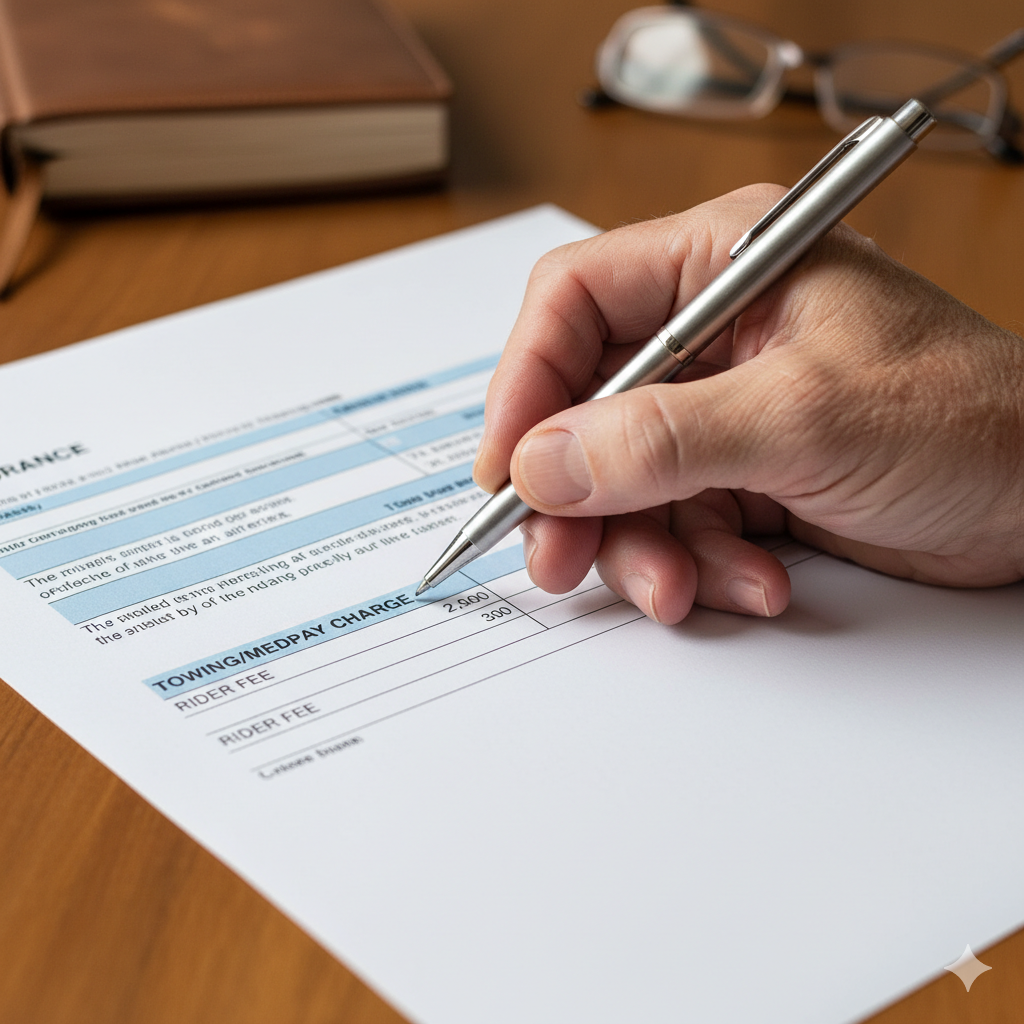

Your auto insurance policy is likely full of expensive extras—or “riders”—you bought years ago out of habit. In retirement, these riders are often just fluff that wastes money you need for your fixed income.
A policy that was perfect for a working commuter with a car loan is probably now costing you hundreds of dollars for coverage you don’t need and can’t use.
The fastest way to lower your monthly premium, after claiming your Low-Mileage Discount, is to audit these costly riders. We’ve identified five common extras that seniors should immediately check, with clear guidance on whether to drop them or keep them.
Key Takeaways
- Audit Your Policy: Your current coverage is based on your lifestyle 10 years ago—it’s likely too expensive for your needs today.
- Roadside Double-Dip: Many seniors waste money paying for both insurance Roadside Assistance and AAA.
- Medical Redundancy: Don’t pay for MedPay/PIP if your excellent Medicare/Medigap plan already covers you.
- The Goal: Dropping unnecessary riders is a simple way to create immediate savings you can rely on.
1. Rental Car Reimbursement
|
DROP IT IF...
|
KEEP IT IF...
|
|---|---|
|
You have a second, spare vehicle you can use while your primary car is being repaired.
|
You travel frequently or rely on your car as your only vehicle for medical appointments.
|
|
|
2. Roadside Assistance / Towing
|
DROP IT IF...
|
KEEP IT IF...
|
|---|---|
|
You already pay for AAA, AARP Roadside Service, or a credit card program that includes towing.
|
You do not have an existing membership and rely solely on the insurance company for emergency towing.
|
|
|
3. New Car Replacement or Gap Insurance
|
DROP IT IF...
|
KEEP IT IF...
|
|---|---|
|
Your car is paid off, or it is more than 3 years old.
|
You have a new car loan or lease (Gap is often required by the lender).
|
|
|
4. Medical Payments (MedPay) or Personal Injury Protection (PIP)
|
DROP IT IF...
|
KEEP IT IF...
|
|---|---|
|
You have excellent health insurance like Medicare and a strong Medigap or Medicare Advantage plan.
|
You have a very high deductible on your primary health insurance or are worried about covering high deductibles immediately after a crash.
|
|
|
5. Accident Forgiveness or Minor Violation Forgiveness
|
DROP IT IF...
|
KEEP IT IF...
|
|---|---|
|
You have a pristine driving record (no claims or tickets for 20+ years).
|
You have a younger driver (grandchild) listed on your policy who is prone to tickets or fender-benders.
|
|
|
Your 60-Second Rider Audit Quiz
|
Question
|
Your Answer
|
Actionable Result
|
|---|---|---|
|
1. Do you already have AAA/AARP Roadside?
|
[ ] Yes
|
You are paying for a duplicate service. Drop the insurance Towing Rider.
|
|
[ ] Yes
|
You don't need loan protection. Drop Gap or New Car Replacement coverage.
|
|
|
3. Do you have excellent Medicare/Medigap coverage?
|
[ ] Yes
|
Your medical bills are covered elsewhere. Drop MedPay/PIP coverage.
|
|
4. Do you have a spare car you can use for a week?
|
[ ] Yes
|
You don't need a rental. Drop Rental Car Reimbursement.
|
How to Read Your Results: Your Savings Projection
|
Riders Dropped
|
Estimated Annual Savings
|
|---|---|
|
1 Rider (e.g., Roadside)
|
$50 - $100
|
|
$100 - $200
|
|
|
3 Riders (e.g., Roadside + Rental + MedPay/PIP)
|
$200 - $450
|
|
4 Riders (All of the above)
|
$450+
|
The Only Rider You Must Keep: Uninsured/Underinsured Motorist (UM/UIM)
While we recommend dropping the fluff, you must not skimp on coverage that protects your assets. UM/UIM is non-negotiable.
This rider protects you if a driver with no or minimal insurance hits your car. Since many uninsured drivers have very few assets, if you are seriously injured, you would have to sue the driver to cover your long-term medical bills. UM/UIM is the insurance policy that pays you directly so you don’t have to sue a stranger and risk losing your home or retirement savings.
The Final Step: Secure Your Savings
Auditing your riders is the fastest way to save money on your fixed income. By dropping three unnecessary riders, you could easily be saving $100 or more per year.
Don’t assume your current insurer will be proactive about dropping these fees. You need to call them and ask for a detailed breakdown of your premium to see what riders you are paying for.
The smart buyer always compares. By dropping a costly rider and shopping around, you ensure you get maximum security for the absolute lowest price.
Easily compare personalized rates to see how much switching car insurance could save you
Frequently Asked Questions (FAQ)
Yes, for almost all of them. However, if you add Collision/Comprehensive back onto an older car, the insurer may require you to have the car inspected first.
No. Increasing your deductible (e.g., from $500 to $1,000) is a strategic move that saves you money by accepting more initial risk. Dropping coverage means eliminating the entire protection (like eliminating collision coverage completely).
Check the declarations page of your policy. If you see a premium charge listed next to “Medical Payments” or “Personal Injury Protection,” you are paying for it.
It varies by state and company, but dropping just two unnecessary riders (like Rental Car Reimbursement and Roadside Assistance) can often save you $50 to $100 per year, which is pure cash flow for your fixed budget.
Most seniors drop New Car Replacement/Gap Insurance first, followed by Rental Car Reimbursement, as they are the easiest and most financially logical choices once the car is paid off or they have a spare vehicle.